
ESG KPIs: How to Choose, Measure and Track ESG Performance in Australia
Esg Kpis Australia is one of the most important ESG considerations for Australian businesses in 2026. Whether you’re navigating new regulatory obligations, responding to investor and customer expectations, or building a credible sustainability strategy from the ground up, this guide provides the practical, Australian-context framework you need.
For a comprehensive overview of the full pillar, read our guide to ESG Strategy for Australian Businesses. For the complete ESG framework, see our ESG Australia complete guide.
What Is an ESG Baseline Assessment?
The process of measuring your current environmental, social and governance performance before setting targets
- Establishes the starting point from which all progress is measured and reported
- Required for credible target-setting: you cannot set meaningful reduction targets without knowing where you start
- Also reveals quick wins — areas of existing good performance that can be reported immediately
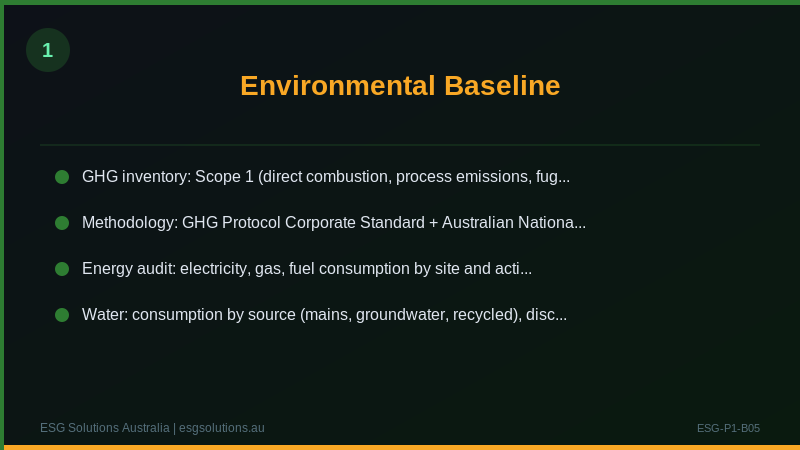
Environmental Baseline
GHG inventory: Scope 1 (direct combustion, process emissions, fugitives), Scope 2 (purchased electricity), Scope 3 (purchased goods, logistics, travel, product use)
- Methodology: GHG Protocol Corporate Standard + Australian National Greenhouse Accounts emission factors
- Energy audit: electricity, gas, fuel consumption by site and activity
- Water: consumption by source (mains, groundwater, recycled), discharge, water stress exposure of sites
- Waste: generation by type, recycling and recovery rates, hazardous waste management
Social Baseline
Workforce data: headcount, turnover, employment type (permanent, casual, contractor), pay equity analysis
- WHS statistics: LTIFR, TRIFR, near-miss rates, fatalities and serious injuries over 3-year trend
- Diversity: gender, First Nations, cultural background representation across seniority levels
- Modern Slavery: supply chain mapping to identify tiers, geographies and risk categories
- Community: current social investment programs, community feedback, First Nations engagement history
Governance Baseline
- Board composition: independence ratio, gender diversity, skills matrix, committee structure
- Policies in place: code of conduct, anti-bribery, whistleblower, environmental, diversity
- Risk management: ESG risk coverage in enterprise risk register, review cadence, board visibility
- Reporting: current ESG/sustainability disclosures, assurance history, regulatory compliance status
Common Baseline Assessment Pitfalls
- Scope 3 omission: many organisations complete Scope 1/2 only and miss the largest emissions source
- Data quality: using estimates without documented methodology undermines AASB S2 assurance readiness
- Social data silos: workforce data in HR, supply chain in procurement, safety in WHS — consolidation required
- Point-in-time approach: baseline should establish a 3-year trend where possible for meaningful comparison
Frequently Asked Questions About Esg Kpis Australia
What are the most important ESG KPIs?
Understanding what are the most important esg kpis is essential for Australian businesses managing their ESG obligations. The key is to combine a clear understanding of your regulatory requirements with practical, measurable action plans aligned to your materiality assessment findings and stakeholder expectations.
How do I choose metrics?
Understanding how do i choose metrics is essential for Australian businesses managing their ESG obligations. The key is to combine a clear understanding of your regulatory requirements with practical, measurable action plans aligned to your materiality assessment findings and stakeholder expectations.
How do I track ESG data?
Understanding how do i track esg data is essential for Australian businesses managing their ESG obligations. The key is to combine a clear understanding of your regulatory requirements with practical, measurable action plans aligned to your materiality assessment findings and stakeholder expectations.
What tools help?
Understanding what tools help is essential for Australian businesses managing their ESG obligations. The key is to combine a clear understanding of your regulatory requirements with practical, measurable action plans aligned to your materiality assessment findings and stakeholder expectations.
Next Steps: Book a Free ESG Strategy Session
Building credible esg kpis australia practices is an ongoing process that requires genuine commitment, robust data and transparent reporting. The regulatory landscape in Australia is evolving rapidly — businesses that build strong foundations now will be best positioned as obligations expand.
ESG Solutions works with Australian businesses to develop practical, credible ESG strategies tailored to your sector, size and specific obligations. Contact us today to discuss your needs.
Book a Free ESG Strategy Session — contact our team to get started.